We didn't just tell you SureSleep® works. We commissioned an independent study to find out, tracking real DoNotAge.org customers, in their own beds, for 21 days. Here is everything it found, including what it can't claim.
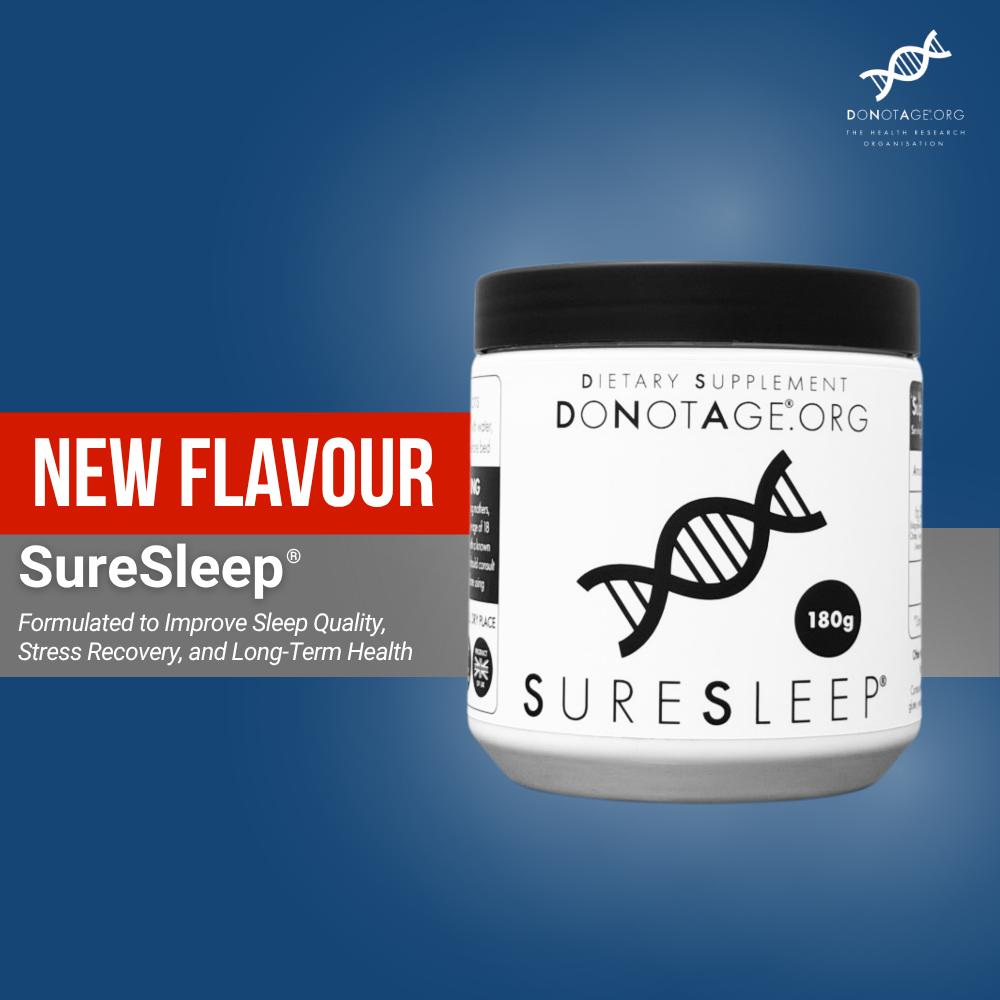
Almost every sleep supplement brand will show you a study. Look closely and it's usually a single ingredient, tested years ago, by someone with a reason to like the answer. They didn't study the product they're selling you, and they certainly didn't hand the results to anyone independent.
We did the opposite. We asked BioStackr, an independent research platform, to track real DoNotAge.org customers taking SureSleep® for 21 days, and then we got out of the way. We had no access to the raw submissions and no say over the metrics, the exclusion rules, or the results. We saw the findings when you did.
Outside of the lab. No perfect conditions. Just the product, the people, and 1,472 honest daily check-ins across thirteen countries, alcohol, travel, bad weeks and all.
100% of our profits fund ageing research. Measuring what our products really do is part of that work.Across 51 analysed completers, comparing each person's final five days against their own pre-product baseline.
Average scores rose from 5.15 to 6.77 out of 10 — a 31% jump, and a large effect by any statistical measure (Cohen's d 1.13).
The clearest signal in the study. Energy climbed from 5.06 to 6.65 (+31%), with the largest effect size we measured (Cohen's d 1.22).
Three in four moved toward easier sleep onset across the cohort (Cohen's d 0.88).
More than half reported fewer night wakes, with the cohort improving directionally (Cohen's d 0.36).
The clearest pattern was sleep that paid off the next day better sleep quality at night gave people more energy in the morning.
Every participant rated their sleep quality and daytime energy out of ten, every day, and logged how easily they fell asleep and how often they woke. We compared each person's first few days (before the product arrived) against their final five days on SureSleep®.
The two strongest, most consistent shifts were sleep quality and next-day energy. Both improved by roughly a third, both with large effect sizes, and both held up once disrupted days were stripped out.
Sleep quality and daytime energy aren't abstract numbers. They're whether you wake up feeling like the night did its job, and whether the afternoon slump arrives. Those are the things people actually notice.
These customers reported real, measurable improvements in exactly those things — after changing nothing except adding SureSleep® to their evening. We can't promise you'll be one of them. We can show you, honestly, what happened to people who were already trying to sleep better.
Participants were recruited from existing DoNotAge customers across 13 countries. Most had already worked their way through the usual options before the study began.
Four outcomes, logged daily, with a baseline collected before anyone touched the product.
Participants flagged days disrupted by real life. Here are the factors that impacted normal sleep the most:
Onset moved toward the harder end on these days. Overall quality was less affected than expected.
The largest drop in sleep quality and more wakeups. This was the most consistent disruptor across the whole cohort.
Higher sleep quality and fewer wakes, though onset was slightly harder.
Subjective quality dropped further than the objective metrics. People thought they slept worse than they actually did.
Shown anonymously, exactly as submitted.
The only sleep aid I've taken that helped me fall asleep without the 'sleep hangover' others tend to give.Participant · age 35–44 · United Kingdom
A natural product that helped me fall asleep quicker, and wake up less often.Participant · age 45–54 · Ireland
For the first time in a long time my partner noticed that I was falling asleep before him.Participant · age 35–44 · United States
Best product with effective ingredients for sleep support I have ever tried so far.Participant · age 55–64 · Lithuania
Seemed more alert and didn't have the afternoon slump that I sometimes get.Participant · age 45–54 · Canada
For those whose mind is busy before going to bed, it helps to calm you down.Participant · age 55–64 · Australia
We'd rather tell you the limits ourselves than have you wonder about them. Here's the honest shape of it.
We report what the data says whether it flatters us or not.
This study was commissioned by DoNotAge.org and conducted independently by BioStackr. BioStackr designed the protocol, managed data collection, set the confound-exclusion rules and ran the analysis. DoNotAge.org had no access to the raw submissions and no editorial control over the metrics, exclusions or results. BioStackr earns no commission, affiliate fee or revenue from SureSleep® sales.
Take a closer look at the product behind the study. Explore the ingredients, how to use it, and the available options.
Shop SureSleep®
A study like this doesn't happen without people willing to answer honest questions about how they slept, night after night, with no idea whether they'd been any help at all. Fifty-one of them saw it through, across thirteen countries.
Every number on this page exists because real people showed up. Tired, travelling, mid-cold, hungover, and through the good nights too. We're grateful to all of them.
— The DoNotAge.org Research Team
